- Project Biohacking Newsletter
- Posts
- Gila Monsters, GLP-1s, and One Very Persistent Myth
Gila Monsters, GLP-1s, and One Very Persistent Myth
Are your weight‐loss meds made from lizard venom?

Jeffrey Nunn
February 18, 2026
Hey Biohackers,
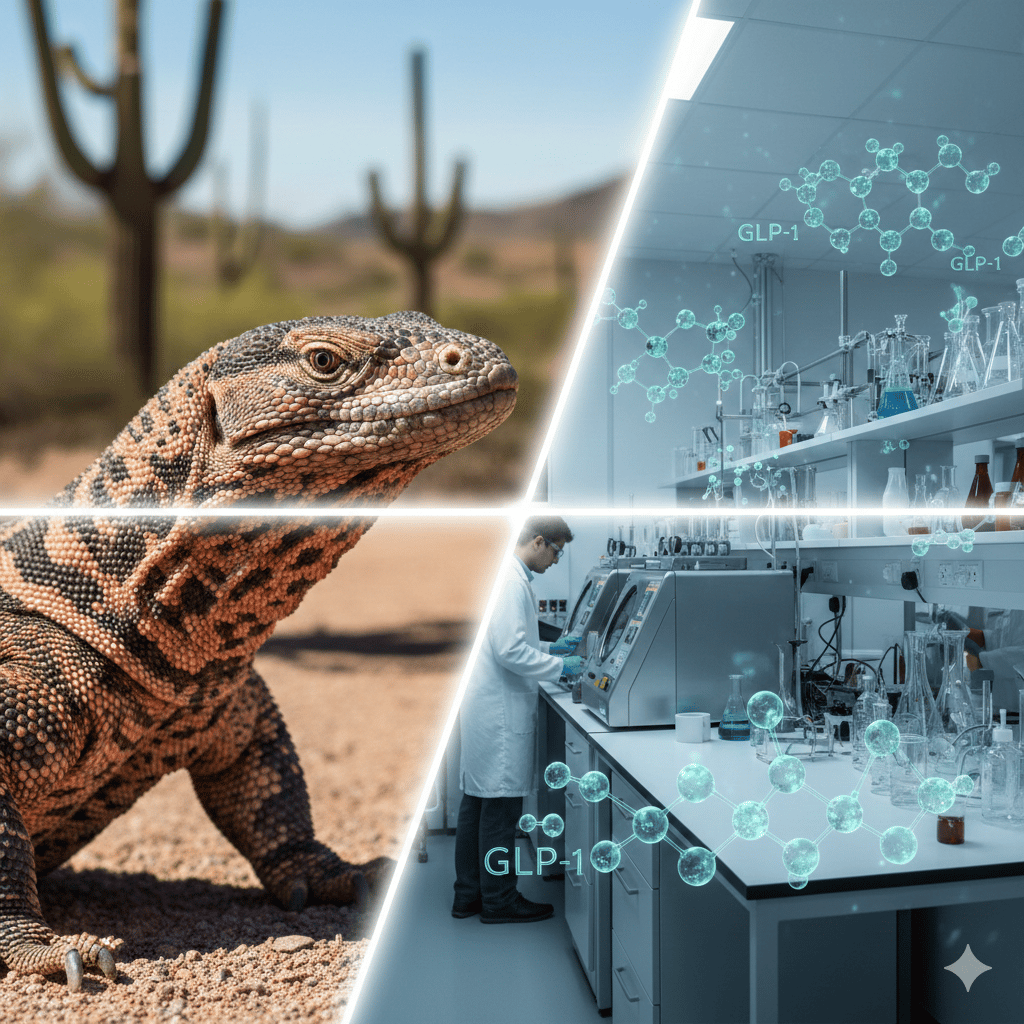
You have probably seen the headline. Something like "Ozempic was derived from Gila monster saliva" or "the weight loss drug came from lizard venom." It spreads reliably because it is weird, visual, and easy to compress into a single sentence.
The actual story is more interesting, and more useful to understand.
Affiliate Disclosure: This newsletter contains affiliate links. When you purchase through these links using code PROBIO15, I may earn a commission at no additional cost to you. I only recommend vendors I personally use and trust.

Myth Busted
Myth vs. Reality
The popular version: GLP-1 drugs like semaglutide were found in, or derived from, Gila monster venom.
The accurate version: GLP-1 is a hormone your small intestine produces every time you eat. It boosts insulin secretion, suppresses glucagon, slows gastric emptying, and signals satiety. It was identified in human physiology decades before anyone looked at a lizard.
Modern GLP-1 receptor agonists including semaglutide are fully synthetic analogues of human GLP-1. They are designed and manufactured in pharmaceutical labs. No lizards are involved in production.
Where the Gila monster actually fits
The problem researchers faced after identifying GLP-1 in the 1980s was not that the hormone did not work. It worked well. The problem was that endogenous GLP-1 degrades in circulation within minutes, which makes it useless as a drug.
In the early 1990s, John Eng and colleagues isolated a peptide called exendin-4 from Gila monster venom. Exendin-4 activates the GLP-1 receptor and shares GLP-1-like activity, but it resists the enzymes that break down the human hormone. Its plasma half-life is measured in hours rather than minutes.
A synthetic version of exendin-4, called exenatide, became the first approved GLP-1 receptor agonist in 2005. That drug, sold as Byetta, came directly from the Gila monster finding.
So the animal story is real. It just describes a pharmacokinetics solution, not the discovery of the hormone.
How we got from there to Ozempic
Exenatide validated the GLP-1 receptor as a viable drug target. But the drugs that followed, including liraglutide and semaglutide, took a different path. They are engineered analogues of human GLP-1, not derivatives of exendin-4.
Semaglutide uses the human GLP-1 sequence as its starting point, with specific amino acid substitutions and a fatty acid side chain that binds to albumin in the bloodstream. This binding is what extends its half-life to approximately one week, enabling weekly dosing.
The lineage looks like this:
Human GLP-1 is discovered as a hormone in the 1980s, but degrades too quickly to be used therapeutically. Gila monster exendin-4 demonstrates in the early 1990s that GLP-1-like agonism can be made stable, leading to exenatide in 2005. Human GLP-1 analogues, built directly from the human sequence with chemical modifications, produce liraglutide, semaglutide, and today's long-acting drugs.
The lizard is a branch on that tree, not the root.
Why this matters beyond trivia
The Gila monster example is a useful illustration of how nature functions in drug development. Venoms, fungi, plant compounds, and marine organisms are libraries of bioactive structures. Researchers identify molecules with interesting properties, then re-engineer them for stability, selectivity, and safety.
The finished drug is almost never the natural molecule. It is what that molecule pointed toward.
For anyone paying attention to peptide research, this distinction matters. Bio-inspired and animal-derived are not the same thing. Understanding which category a drug falls into changes how you interpret its mechanism, its risk profile, and the claims made about it.
GLP-1 lives in your gut. The Gila monster gave researchers a blueprint for keeping a similar signal alive long enough to use. And Ozempic is built in a factory, not a terrarium.
If you are researching GLP-1 receptor agonists, sourcing matters.
Third-party tested, clearly documented, and organized for researchers who know what they are looking for. |

Project Biohacking Resources
Some links may be affiliate links; I may earn a small commission at no extra cost to you. I only recommend vendors I use and trust, Biolongevity Labs!
👇🏻Oral Bioregulators Discount Codes | PROBIO10 for 10% off👇🏻
👇🏻Supplements Affiliates👇🏻
👇🏻Lab Affiliatess👇🏻
Guides

From Around The Web
🔚 Outro & Final Thoughts
Research moves faster than the headlines that cover it. Understanding the difference between what a molecule is, where it came from, and what it was engineered to do is the kind of foundation that makes everything else clearer.
That is what this newsletter is for.
Until next time, stay ahead of your age!
– Jeff
Founder, Project Biohacking
Affiliate & Earnings Disclosure
Project Biohacking participates in affiliate partnerships with select peptide vendors. When you make purchases through the links provided in this newsletter or use discount code PROBIO15, I may receive a commission at no extra cost to you.
These affiliate relationships do not influence my recommendations, I only promote products and vendors I personally use, have researched thoroughly, and believe provide value to the biohacking community. All opinions expressed are my own based on personal experience and research.
Your support through these affiliate links helps fund the research, testing, and content creation that makes Project Biohacking possible.
Disclaimer: I’m here to share what I’ve learned, not to replace your doctor. Always check with a qualified healthcare provider before trying anything new. And yes, peptides are often for research use only; please don’t turn your kitchen into a chemistry lab without supervision.