- Project Biohacking Newsletter
- Posts
- When Your Dog or Cat Has a Peptide Calculator Too
When Your Dog or Cat Has a Peptide Calculator Too
The Peptide Calculator Math Is the Same. The Subject Is Not.

Jeffrey Nunn
March 30, 2026
Hey Biohackers,
You already know how to use a peptide calculator.
You enter the vial size, the diluent volume, the target concentration. The math returns a number. You have done this enough times that it feels routine.
Now imagine running the same calculation for a 14-pound cat
The formula does not change. Concentration is still mass divided by volume. That part is not the debate. What changes is everything the formula assumes about the subject it is computing for, and those assumptions were built around human physiology, human body composition, and human research conventions that do not map cleanly onto a companion animal.
This is not a small distinction.
Affiliate Disclosure: This newsletter contains affiliate links. When you purchase through these links using code PROBIO15, I may earn a commission at no additional cost to you. I only recommend vendors I personally use and trust.
Weight scaling is not the whole variable
The obvious adjustment when moving from a human subject to a dog or cat is body weight. A smaller subject means a smaller mass input, and the output adjusts accordingly. Most people stop there.
The problem is that weight is a proxy for a set of physiological variables that do not scale linearly across species. Metabolic rate relative to body mass differs between humans and companion animals. Tissue distribution, clearance rate, and the ratio of lean mass to total body weight all behave differently depending on the species and the individual animal. A weight-based calculation that is reasonably precise for a 180-pound human does not carry that same precision to a 9-pound cat just because the number is smaller.
The margin for error contracts. The same rounding behavior, unit interpretation variance, and diluent volume assumption that produces an acceptable range in human research math produces a proportionally wider swing at smaller scales. That gap matters more when the subject has less room to absorb it.
What the pet calculator actually does
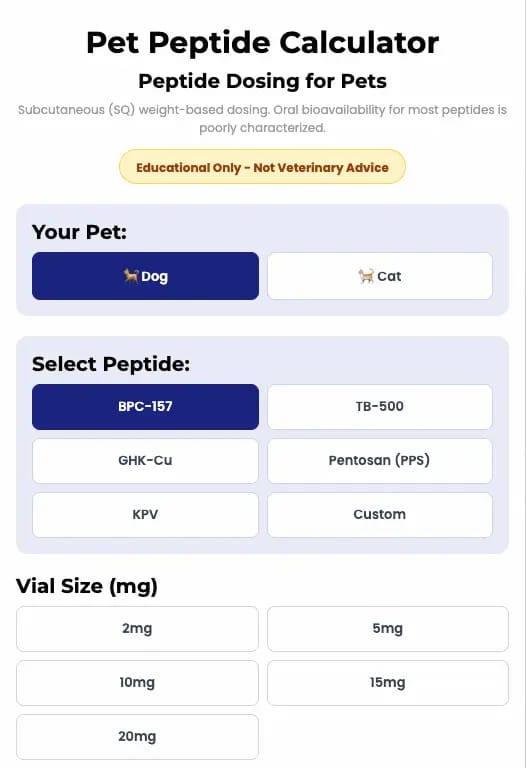
The tool at Project Biohacking approaches this honestly. It applies weight-scaled reconstitution logic calibrated for species-appropriate mass inputs. It is a reference tool, not a clinical instrument. It does not account for species-specific pharmacokinetics, individual animal health status, or veterinary contraindications, and it says so.
That framing is the point. The calculator gives you a research reference figure built on inputs it can actually compute. It does not overstate what weight-based math can tell you about a non-human subject. The limit of the tool is part of the tool.
The sourcing standard does not soften because the subject is smaller
If anything, it tightens.
Every variable that introduces uncertainty in human peptide research, compounding consistency, labeled versus actual concentration, storage and lyophilization quality, is present in veterinary research use too. At smaller body weights, those variables have a proportionally larger effect on what the calculation is actually measuring against.
A CoA that is acceptable for human research use is the floor, not the ceiling, when the subject is a companion animal. Third-party testing documentation, verifiable sourcing, and a vendor whose quality signals you have already evaluated are not optional considerations here. They are the precondition for the math meaning anything at all.
If you are evaluating sourcing options for this kind of research, our vendor directory covers the quality signals worth checking before you commit to a supplier.
New Website Calculator Highlight
The full methodology behind the pet calculator, including the species-specific variables considered during development and where the tool's current limits are, is covered on the site.
Use it here: Peptide Calculator for Pets | Project Biohacking
The math is only as good as what it is measuring against
A calculator returns a reference figure. What that figure means depends entirely on the material it is computed against.
BioLongevity Labs sources compounds with third-party testing documentation. If you are running research at small-subject scales where compounding variance has less room to hide, verified sourcing is where that work starts. | 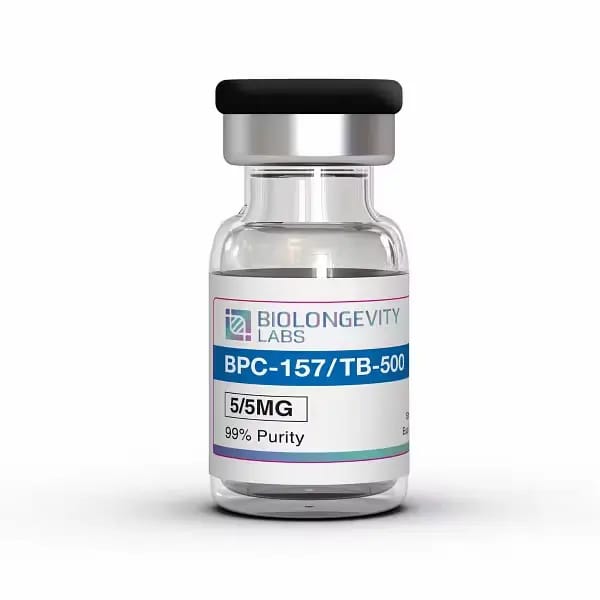 |

Project Biohacking Resources
Some links may be affiliate links; I may earn a small commission at no extra cost to you. I only recommend vendors I use and trust, Biolongevity Labs!


👇🏻Supplements Affiliates👇🏻
Your body isn't broken — it's just been starved of the right nutrients. Clive de Carle's complete line of natural health essentials gives it exactly what it needs.
👇🏻Lab Affiliatess👇🏻


Guides
From around the web
🔚 Outro & Final Thoughts
The number a pet calculator returns is not the answer. It is a starting point for a question that requires more care than the human equivalent, not less.
The formula transfers. The assumptions do not. Knowing the difference is the whole job.
Until next time, stay ahead of your age!
– Jeff
Founder, Project Biohacking
Affiliate & Earnings Disclosure
Project Biohacking participates in affiliate partnerships with select peptide vendors. When you make purchases through the links provided in this newsletter or use discount code PROBIO15, I may receive a commission at no extra cost to you.
These affiliate relationships do not influence my recommendations, I only promote products and vendors I personally use, have researched thoroughly, and believe provide value to the biohacking community. All opinions expressed are my own based on personal experience and research.
Your support through these affiliate links helps fund the research, testing, and content creation that makes Project Biohacking possible.
Disclaimer: I’m here to share what I’ve learned, not to replace your doctor. Always check with a qualified healthcare provider before trying anything new. And yes, peptides are often for research use only; please don’t turn your kitchen into a chemistry lab without supervision.