- Project Biohacking Newsletter
- Posts
- Why Peptide Dosing Feels Confusing (It’s Usually Just Math)
Why Peptide Dosing Feels Confusing (It’s Usually Just Math)
The quiet math mistakes that make peptide dosing feel harder than it needs to be

Jeffrey Nunn
February 02, 2026
Happy Monday Biohackers,
Peptide dosing has a reputation for being complicated. Even people who have been around peptides for a while often describe it as confusing, inconsistent, or easy to get wrong.
What’s interesting is that the confusion rarely comes from the peptide itself.
Affiliate Disclosure: This newsletter contains affiliate links. When you purchase through these links using code PROBIO15, I may earn a commission at no additional cost to you. I only recommend vendors I personally use and trust.

Its just math!!
More often, it shows up before the peptide is ever used. It starts with numbers that seem familiar but are quietly misunderstood. Milligrams and micrograms get treated like interchangeable units. Concentration gets assumed instead of calculated. Charts get followed without checking whether the underlying math still applies.
When things don’t line up, the instinct is to blame the source, the protocol, or the calculator.
Most of the time, the issue is simpler than that.
The Hidden Source of Most Dosing Errors
Almost every peptide dosing mistake traces back to one of three places:
A unit conversion that was never double-checked
A concentration that was assumed rather than calculated
A dilution volume that changed without the math being updated
None of those problems feel dramatic in the moment. They look like reasonable shortcuts. But together, they create a situation where two people can think they are doing the same thing while actually delivering very different amounts.
This is why peptide dosing can feel unpredictable even when someone is being careful. The foundation is slightly off, so everything built on top of it feels unstable.
Why Charts and “Standard Doses” Fall Apart
Dosing charts are appealing because they remove thinking. They promise consistency and simplicity.
The problem is that charts assume a fixed concentration. That assumption only holds if the peptide was reconstituted in exactly the same way the chart expects. Change the dilution volume and the chart quietly stops working.
Nothing about the peptide has changed. The math has.
This is where frustration creeps in. People feel like they followed instructions, yet the outcome feels different than expected. The missing step is rarely obvious because it lives in the math, not the protocol.
Where Calculators Fit and Where They Don’t
Peptide calculators are useful tools. They are also easy to misunderstand.
A calculator does not decide what your concentration is. It does not know how much liquid you added. It does not correct unit mistakes. It simply processes the numbers you give it.
When the inputs are correct, calculators are excellent confirmation tools. When the inputs are wrong, they confidently return the wrong answer.
This is why understanding the math first matters. Once the relationships between units, dilution volume, and concentration make sense, the calculator becomes a way to verify your thinking rather than replace it.
The Shift That Makes Dosing Feel Predictable Again
The turning point for most people comes when dosing stops being treated as a recipe and starts being treated as a calculation.
Instead of asking, “What number should I follow?” the question becomes, “How do these numbers relate to each other?”
That shift removes a lot of anxiety. It also makes dosing more consistent across time, different vials, and different reconstitution choices.
When the math is clear, the process becomes repeatable. When the math is fuzzy, everything feels fragile.
Authority Bridge
At Project Biohacking, the emphasis is on understanding before optimization. Tools and calculators have their place, but they work best when they are built on clear thinking rather than assumptions.
Getting the math right once saves a lot of second-guessing later.
Read the full breakdown of peptide dosage math
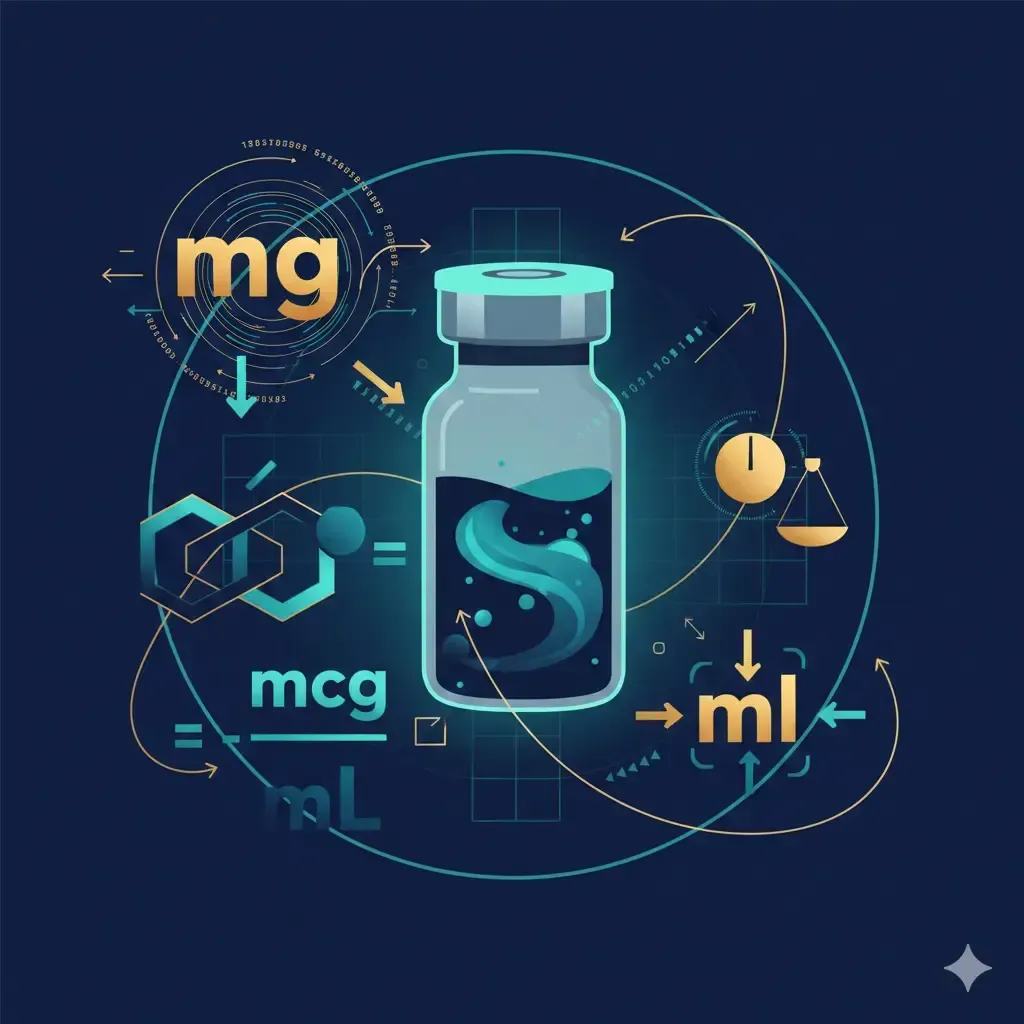
This walks through how milligrams, micrograms, milliliters, and concentration fit together step by step.
Verify your numbers using the peptide calculator
Use it to confirm the math after the inputs make sense. From Project Biohacking Insights Blog
Project Biohacking Resources
Some links may be affiliate links; I may earn a small commission at no extra cost to you. I only recommend vendors I use and trust.Shop Now at Biolongevity Labs

Quick links to Vetted Sources & Discount Codes
👇🏻15% off Peptide Sites Using PROBIO15 Coupon Code 👇🏻
👇🏻Oral Bioregulators Discount Codes | PROBIO10 for 10% off👇🏻
👇🏻Supplements Affiliates👇🏻
👇🏻Lab Affiliatess👇🏻
Guides
From Around The Web
🔚 Outro & Final Thoughts
If there’s one idea to take away from this, it’s this: peptide dosing isn’t unpredictable. It only feels that way when the math behind it stays invisible.
Once units, concentration, and dilution volume are clear, the rest of the process becomes easier to reason about. Decisions feel calmer. Changes make sense. And small adjustments stop feeling risky.
That kind of clarity is what Project Biohacking is built around. Not shortcuts. Not hype. Just a better way to think through the details that actually matter.
If this issue helped reset how you look at dosing, the full article goes deeper into the math and shows how all the pieces fit together. And if you already understand the inputs, the calculator is there to confirm your numbers, not guess them.
Until next time, stay ahead of your age!
– Jeff
Founder, Project Biohacking
Affiliate & Earnings Disclosure
Project Biohacking participates in affiliate partnerships with select peptide vendors. When you make purchases through the links provided in this newsletter or use discount code PROBIO15, I may receive a commission at no extra cost to you.
These affiliate relationships do not influence my recommendations, I only promote products and vendors I personally use, have researched thoroughly, and believe provide value to the biohacking community. All opinions expressed are my own based on personal experience and research.
Your support through these affiliate links helps fund the research, testing, and content creation that makes Project Biohacking possible.
Disclaimer: I’m here to share what I’ve learned, not to replace your doctor. Always check with a qualified healthcare provider before trying anything new. And yes, peptides are often for research use only; please don’t turn your kitchen into a chemistry lab without supervision.