- Project Biohacking Newsletter
- Posts
- The Peptide Era Has Arrived. Hollywood Just Noticed
The Peptide Era Has Arrived. Hollywood Just Noticed
What movie stars, wellness clinics, and tech founders all share isn't vanity. It's early access to a drug class reshaping modern medicine.

Jeffrey Nunn
February 13, 2026
Hey Biohackers,
Peptides are suddenly everywhere. They show up in celebrity interviews, in the menus of elite wellness clinics, in tech circles that trade compounds the way previous generations traded nootropics, and across influencer feeds that flatten complex biology into aesthetic shorthand. The sudden visibility makes it feel like a trend, or worse, a fad. But peptides did not emerge from Hollywood or Instagram. They arrived there late, after decades of quiet use in hospitals, pharmaceutical research, and experimental medicine. What we're seeing now isn't the birth of the peptide era. It's the moment it became culturally legible.
Affiliate Disclosure: This newsletter contains affiliate links. When you purchase through these links using code PROBIO15, I may earn a commission at no additional cost to you. I only recommend vendors I personally use and trust.

Hollywood discovering peptides!
The timeline matters. Peptides have been workhorses in endocrinology for generations. Insulin is a peptide. So is glucagon, oxytocin, and vasopressin. Growth hormone therapy, used clinically since the 1980s, relies on peptide signaling. Cancer diagnostics use peptide markers. Metabolic research depends on peptide pathways. The pharmaceutical industry has been developing peptide-based therapeutics for decades, not because they're fashionable, but because they work in contexts where small molecules don't.
What changed wasn't the science. It was the access model.
Wellness clinics began offering peptides as preventive maintenance rather than disease intervention. Tech workers started sourcing research-grade compounds for personal experimentation. Biohackers built communities around systematic self-administration. And then celebrities started talking about it, not as medical treatment, but as optimization. The infrastructure was already there. The cultural framing just shifted.
Hollywood didn't invent this. It noticed it.
The cultural visibility makes peptides seem new, which drives curiosity, which increases adoption, which generates more content. But the underlying biomedical shift predates the hype by decades. We're watching the trailing edge of a transformation that already happened in research labs and clinical settings. And that transformation is accelerating.
The wellness clinic model demonstrates what's possible when peptides move from sick care to well care. High-end facilities now treat peptide injections the way previous generations treated vitamin infusions: routine, recurring, optional. The framing is preventive rather than corrective. You're not sick. You're optimizing. The compounds prescribed might include BPC-157 for tissue repair, thymosin beta-4 for immune function, or GHK-Cu for skin regeneration. Many of these peptides have legitimate preclinical or clinical research supporting specific mechanisms. The clinical context matters, but the access is expanding.
Tech culture took a different path. Instead of clinics, they built knowledge-sharing communities. Instead of professional oversight, they emphasized systematic self-experimentation. The ethos borrows from open-source software: share protocols, compare results, iterate publicly. The knowledge base is often surprisingly deep. People are tracking biomarkers, documenting responses, and building collective intelligence around what works under what conditions.
This represents something genuinely new: distributed expertise around emerging therapeutic tools. When someone in a biohacking forum describes their peptide stack, they're contributing to a knowledge base that didn't exist ten years ago. The medical establishment will eventually catch up, but the experimentation is happening now.
Here's what's actually happening beneath the cultural noise: peptides represent a genuine inflection point in how we think about therapeutic intervention. They operate at a different level of biological specificity than most small-molecule drugs. They can target receptors with precision that earlier generations of pharmaceuticals couldn't match. They're being developed for conditions ranging from metabolic disease to neurodegeneration to immune dysfunction. The pipeline is massive. The clinical potential is real.
They're also harder to manufacture, store, and administer than traditional oral medications. They require cold storage. They degrade quickly. Most need injection. This creates friction that limits casual use while enabling dedicated use. The barrier to entry is real, which means the people who cross it are generally more committed and more informed.
This is where the Hollywood visibility becomes interesting. Celebrity adoption doesn't just reflect vanity. It reflects early access to emerging therapeutic options that haven't yet filtered into standard medical practice. The same dynamic played out with GLP-1 agonists before they became ubiquitous. Wealthy, well-connected individuals gain access to off-label uses of compounds that later become mainstream. They're not trendsetters. They're early adopters of medical infrastructure that's slowly becoming accessible to broader populations.
The peptide era isn't arriving. It's already here. What's arriving is the cultural acknowledgment of something that's been building for years across research institutions, pharmaceutical companies, clinical practices, and experimental communities. The wellness clinics, tech workers, and celebrities are late to a transformation that began long before they noticed.
And that transformation is worth paying attention to.
Peptides are bridging the gap between sick care and well care in ways that traditional pharmaceuticals couldn't. They're enabling targeted interventions for tissue repair, metabolic optimization, immune function, and cognitive performance. They're expanding the toolkit available for people who want to maintain function rather than just restore it after decline. They're creating new categories of therapeutic intervention that don't fit neatly into existing medical frameworks.
Project Biohacking is bullish on peptides. We're bearish on blind copying.
The distinction matters. Peptides are a powerful, expanding drug class with legitimate applications across metabolic health, tissue repair, immune function, and performance optimization. The research is real. The mechanisms are understood at a level that supports rational use. What makes this moment exciting isn't the celebrity adoption. It's the convergence of research maturity, manufacturing capability, and distributed knowledge that makes informed experimentation possible.
What we're watching now is the collision between scientific progress and cultural adoption. Peptides are transitioning from specialized medical tools to something resembling accessible health optimization. That transition creates genuine opportunities. Expanded access to therapeutic options that were previously confined to clinical settings. Better tools for people who want to optimize rather than just maintain. New frameworks for thinking about preventive intervention.
The cultural moment will evolve. The aesthetic signaling will shift. But the underlying biomedical transformation will continue. Peptides will keep expanding into new therapeutic categories. Clinical use will keep growing. Research pipelines will keep producing new compounds. The visibility is temporary. The transformation is permanent.
What matters now is whether the current cultural moment creates better conditions for informed use. Celebrity visibility is driving curiosity that leads to education. Wellness clinics are providing access to therapeutic options with proper oversight. Tech communities are building knowledge bases that didn't exist before. The infrastructure is developing faster than the regulatory frameworks, which creates both risk and opportunity.
The peptide era has arrived. Hollywood just noticed. What happens next is the interesting part. We're moving from a world where peptides were confined to hospitals and research labs to one where they're part of the broader toolkit for health optimization. That's not hype. That's a genuine shift in what's possible.
The challenge is navigating that shift intelligently. Understanding what you're using and why. Distinguishing between compounds with strong evidence and those with speculative claims. Building personal frameworks for decision-making rather than copying protocols. The opportunity is real. The tools are available. The knowledge is accumulating.
This is what the beginning of a therapeutic shift looks like. Not perfect. Not without risk. But undeniably moving forward.
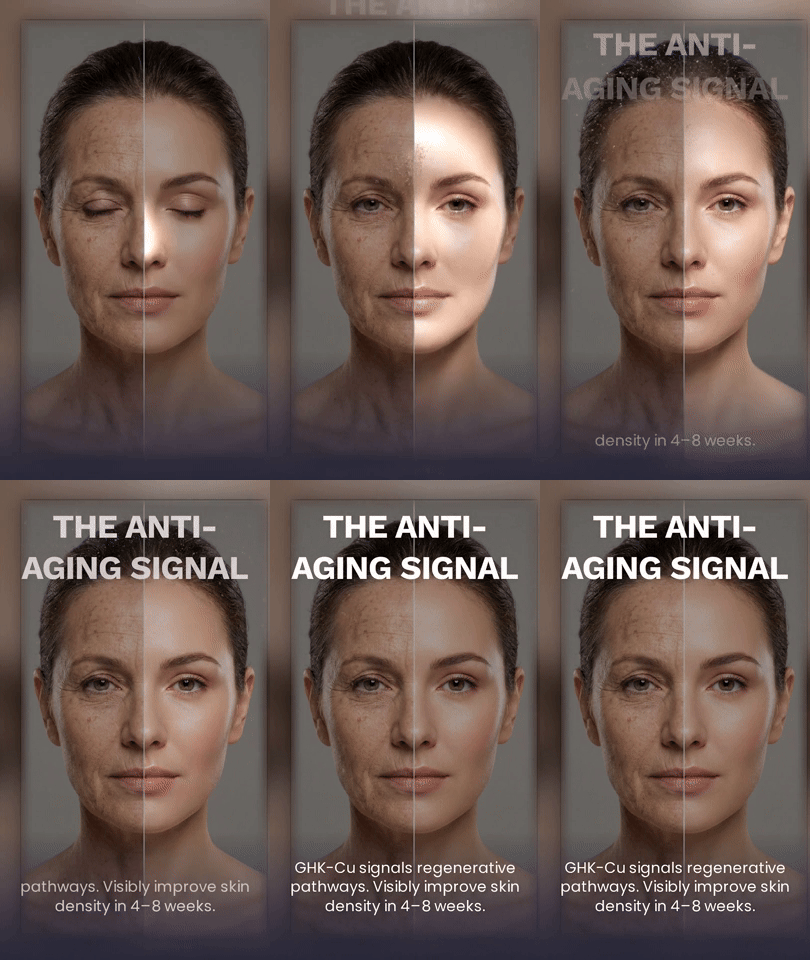
GLOW Blend is GHK-Cu, BPC-157, TB-500, and KPV.
If You're Ready to Start: GLOW Blend Is 45% Off Through February
One of the most common entry points for people exploring skin-focused peptides is GHK-Cu, the copper peptide with substantial research behind tissue repair and collagen synthesis. BioLongevity Labs' GLOW Blend combines GHK-Cu with complementary peptides in a formulation designed for research use.
Through the end of February, BioLongevity Labs is running a 30% sitewide sale. Stack that with code PROBIO15 for an additional 15% off, bringing your total discount to 45%. If you've been waiting for a lower barrier to entry, this is it. Shop GLOW Blend at BioLongevity Labs and use code PROBIO15 at checkout. |

Project Biohacking Resources
Some links may be affiliate links; I may earn a small commission at no extra cost to you. I only recommend vendors I use and trust Biolongevity Labs.
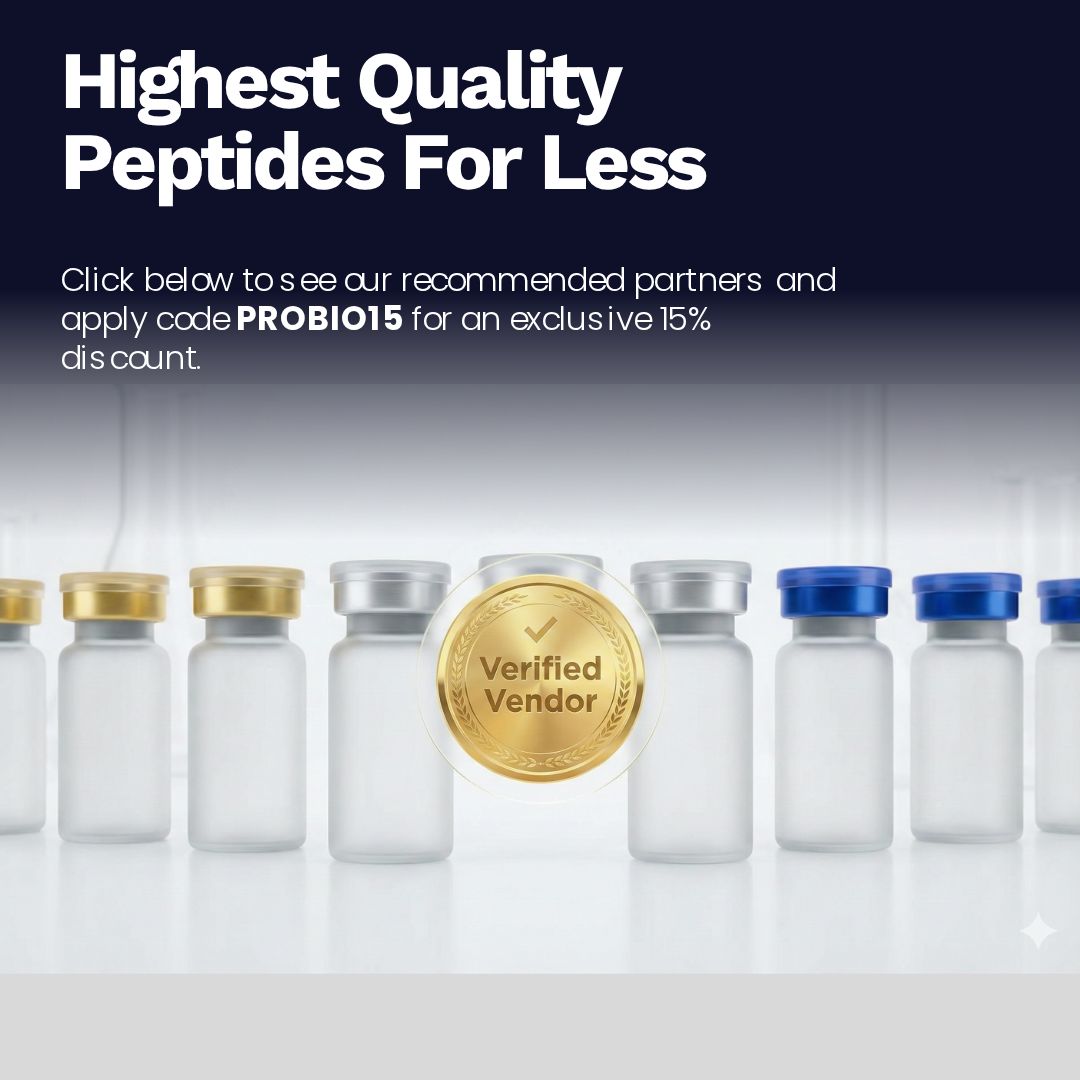
👇🏻Oral Bioregulators Discount Codes | PROBIO10 for 10% off👇🏻
👇🏻Supplements Affiliates👇🏻
👇🏻Lab Affiliatess👇🏻
Guides
From Around The Web
🔚 Outro & Final Thoughts
Most people will hear about peptides through filtered celebrity stories or oversimplified Instagram posts. They'll get the aesthetic version without the substance. You're reading this because you want the actual framework. The difference between chasing what's visible and understanding what's real.
Project Biohacking exists to close that gap. We don't sell protocols. We build decision-making systems. We don't chase trends. We track biomedical shifts before they become culturally obvious. If you're the kind of person who wants to understand why something works before deciding whether to use it, you're in the right place.
The peptide era is here. The question is whether you're going to navigate it intelligently or just follow the crowd.
Until next time, stay ahead of your age!
– Jeff
Founder, Project Biohacking
Affiliate & Earnings Disclosure
Project Biohacking participates in affiliate partnerships with select peptide vendors. When you make purchases through the links provided in this newsletter or use discount code PROBIO15, I may receive a commission at no extra cost to you.
These affiliate relationships do not influence my recommendations, I only promote products and vendors I personally use, have researched thoroughly, and believe provide value to the biohacking community. All opinions expressed are my own based on personal experience and research.
Your support through these affiliate links helps fund the research, testing, and content creation that makes Project Biohacking possible.
Disclaimer: I’m here to share what I’ve learned, not to replace your doctor. Always check with a qualified healthcare provider before trying anything new. And yes, peptides are often for research use only; please don’t turn your kitchen into a chemistry lab without supervision.