- Project Biohacking Newsletter
- Posts
- Your pineal gland is running your sleep, focus, and aging. Here's the peptide targeting it.
Your pineal gland is running your sleep, focus, and aging. Here's the peptide targeting it.
Most biohackers skip this one entirely.

Jeffrey Nunn
April 22, 2026
Hey biohackers,
There's a small gland sitting deep inside your brain, roughly the size of a grain of rice, that most people never think about.
It's quietly running three things you're probably already trying to optimize: sleep quality, cognitive resilience, and how fast your brain ages.
The pineal gland produces melatonin, yes. But its job runs deeper than that. It governs circadian timing at the cellular level, helps neurons maintain themselves under stress, and plays a central role in the sleep-wake transition across multiple neurotransmitter systems. When it starts to degrade, which it reliably does with age, the downstream effects show up in places that don't look connected on the surface.
That's the context that makes Pinealon worth understanding.
Affiliate Disclosure: This newsletter contains affiliate links. When you purchase through these links using code PROBIO15, I may earn a commission at no additional cost to you. I only recommend vendors I personally use and trust.
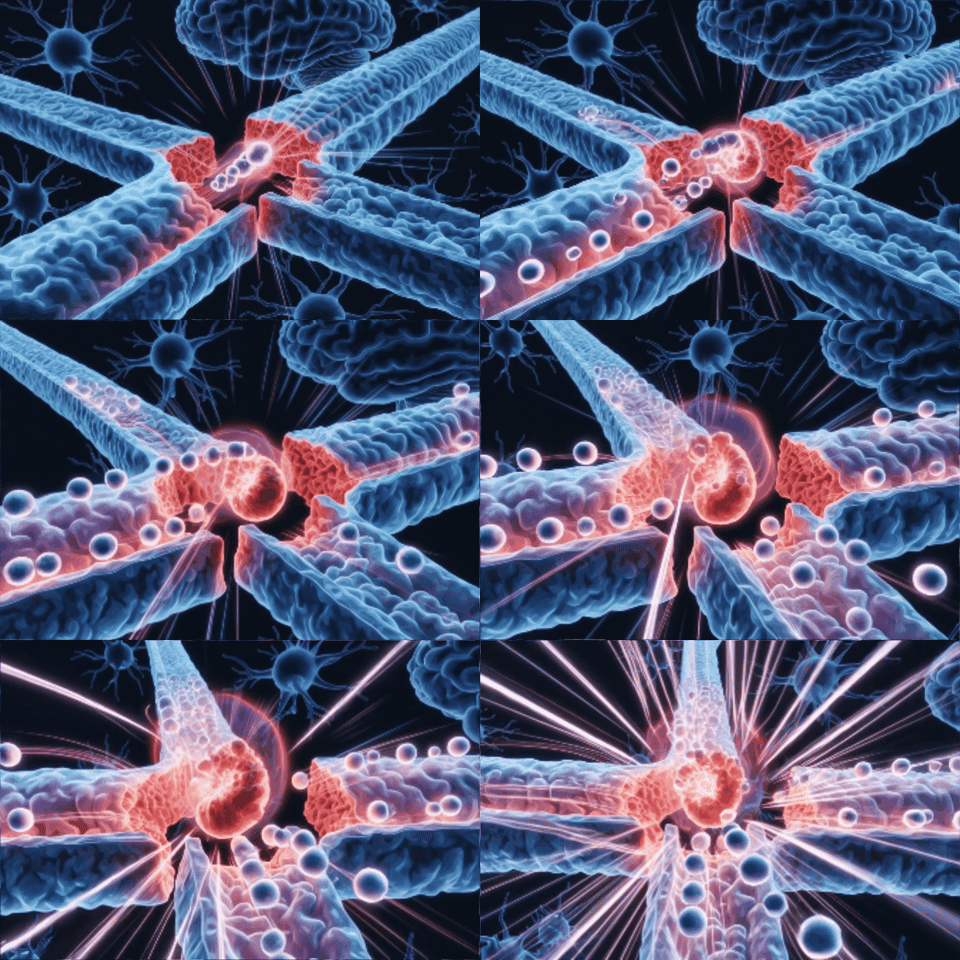
Size determines whether a compound can reach the brain
What it is and why size matters
Pinealon is a synthetic peptide bioregulator made of three amino acids: Glutamic acid, Aspartic acid, and Glycine. In research literature it's sometimes called EDR, after its single-letter sequence codes.
Three amino acids is unusually compact. Small enough to cross the blood-brain barrier more readily than most larger compounds. That crossing matters because a peptide that can't reach the central nervous system can't act on it. Pinealon was developed at the St. Petersburg Institute of Bioregulation and Gerontology as part of a multi-decade research program studying short-chain peptides for geroprotective applications. Its primary target is the central nervous system, with particular focus on the pineal gland at the cellular level.
The sleep connection is more layered than melatonin
Melatonin doesn't operate alone. It's synthesized from serotonin, which is downstream of dietary tryptophan. The whole chain depends on functional neurotransmitter regulation in the brain. When pineal gland output declines, it often reflects deteriorating cellular function in the neural environment governing sleep architecture, not just a melatonin deficiency.
Pinealon's proposed mechanism isn't to add melatonin precursors to the system. It's to support the underlying cellular machinery so that the system functions the way it's supposed to. Research suggests this may translate into more consistent sleep onset and fewer nighttime disruptions, particularly in older individuals whose circadian regulation has become less reliable with age. The human data here is still early-stage. The biological rationale is mechanistically coherent and the preclinical support is consistent.
The neuroprotective angle
This is where it gets more interesting for long-term brain optimization.
Pinealon research has examined its influence on oxidative stress in neural tissue. Oxidative damage accumulates in neurons over time, impairing signal transmission and contributing to gradual cognitive decline. Studies suggest Pinealon may modulate antioxidant defense pathways at the gene expression level, helping neurons respond to that stress before damage becomes permanent.
Animal studies under conditions mimicking neurological stress showed improved neuronal survival, reduced oxidative markers, and better preservation of synaptic density. Synaptic density is one of the earliest things to decline in cognitive aging, and preserving it has real downstream consequences for memory and processing.
There's also research interest around mitochondrial function. Declining mitochondrial output in neurons tracks closely with neurodegenerative progression. Pinealon's potential role in supporting mitochondrial stability in neural tissue is an active area of investigation, still developing rather than settled.
What the evidence actually says
The research base is real, consistent in its findings, and limited in scale. Most of the work comes from preclinical models and small human trials in Russia and Eastern Europe. Within that body of work, the findings point in the same direction: reduced oxidative damage markers, better neuronal survival under stress, gene expression modulation tied to antioxidant and DNA repair activity, and early cognitive improvements in older subjects.
These haven't been replicated at the scale needed for FDA approval. That matters for context. It doesn't invalidate the data, but it means you're working with a frontier compound rather than an established clinical tool. That's where most serious biohacking happens.
Where to go from here
The full research breakdown, covering mechanisms, sleep biology, the neurodegenerative research, and dosage considerations, is on the blog.
Where to get it👇🏻
If you've done the reading and want a vetted source, Biolongevity Labs carries Pinealon. They're one of the suppliers we trust for research-grade bioregulators. Use PROBIO for 15% off at checkout👉🏻 |



Project Biohacking Resources
Some links may be affiliate links; I may earn a small commission at no extra cost to you. I only recommend vendors I use and trust, Biolongevity Labs!


👇🏻Supplements Affiliates👇🏻
Your body isn't broken — it's just been starved of the right nutrients. Clive de Carle's complete line of natural health essentials gives it exactly what it needs.
👇🏻Lab Affiliatess👇🏻


Guides
🔚 Outro & Final Thoughts
Most people chasing better sleep and sharper cognition are working downstream of the real problem. They're optimizing outputs while the source continues to degrade quietly in the background.
Pinealon is one of the few compounds in the bioregulator space that targets the source directly. The research is early by Western standards. The mechanism is coherent. And for anyone already operating at the edges of longevity science, it belongs on your radar.
Until next time, stay ahead of your age!
– Jeff
Founder, Project Biohacking
Affiliate & Earnings Disclosure
Project Biohacking participates in affiliate partnerships with select peptide vendors. When you make purchases through the links provided in this newsletter or use discount code PROBIO15, I may receive a commission at no extra cost to you.
These affiliate relationships do not influence my recommendations, I only promote products and vendors I personally use, have researched thoroughly, and believe provide value to the biohacking community. All opinions expressed are my own based on personal experience and research.
Your support through these affiliate links helps fund the research, testing, and content creation that makes Project Biohacking possible.
Disclaimer: I’m here to share what I’ve learned, not to replace your doctor. Always check with a qualified healthcare provider before trying anything new. And yes, peptides are often for research use only; please don’t turn your kitchen into a chemistry lab without supervision.