- Project Biohacking Newsletter
- Posts
- Why Storage Exposes Vendor Quality
Why Storage Exposes Vendor Quality
Degradation often reveals what manufacturing never disclosed.

Jeffrey Nunn
March 02, 2026
Hey Biohackers,
Most people treat peptide degradation as a user error problem. They assume something went wrong with their technique, the wrong water temperature, an improperly sealed vial, a freezer that cycled too many times.
Sometimes that's true. But not always.
Storage behavior after reconstitution can function as a quality signal. The way a peptide holds up or doesn't — in the days and weeks following reconstitution reflects choices made long before it reached you. Purity standards during synthesis. Lyophilization process quality. How the raw material was handled before it was packaged and shipped.
Affiliate Disclosure: This newsletter contains affiliate links. When you purchase through these links using code PROBIO15, I may earn a commission at no additional cost to you. I only recommend vendors I personally use and trust.

The COA Tells You One Thing
The biohacking community has developed a habit of treating third-party testing as the end of the quality conversation. If a vendor shows a COA, the assumption is that the question is settled.
But a certificate of analysis is a point-in-time measurement. It captures what a sample tested as under specific conditions, on a specific date. It doesn't capture how that material was produced, how it was stored between synthesis and packaging, or how it will behave once you add bacteriostatic water and put it in your refrigerator.
Testing is necessary. The point is that it's a floor, not a ceiling. A COA tells you a peptide met a minimum standard at one moment. It says nothing about what happens next.
What Manufacturing Actually Determines
Stability after reconstitution is influenced by decisions made during synthesis and lyophilization — the freeze-drying process that converts liquid peptide into the powder you receive.
Lyophilization done well produces a consistent, low-moisture cake that reconstitutes cleanly and holds structure over time. Done poorly, it can leave residual moisture or structural inconsistencies that accelerate degradation. These differences aren't visible when you open the vial. They're not captured on a standard HPLC test. But they affect how long your peptide remains stable after reconstitution.
The same applies to synthesis purity. A peptide tested at 98% purity still contains 2% of something else. What that consists of depends on the synthesis process — residual solvents, truncated sequences, oxidation byproducts. A vendor with tighter controls produces a cleaner starting material. That material behaves differently in storage than one that scraped the minimum threshold.
None of this shows up on the COA. But it shows up in your vial, over time.
The Signals Most People Miss
Practitioners who work with peptides consistently tend to develop informal quality assessments based on storage behavior. A vial that reconstitutes cleanly, holds clarity over multiple weeks, and maintains consistency across the full volume is behaving the way a well-manufactured peptide should. One that clouds earlier than expected or develops particulate before the vial is finished may be telling you something.
These aren't definitive tests. Improper reconstitution technique and temperature fluctuations can produce similar patterns. But when the same behavior appears repeatedly across different vials from the same vendor — or disappears entirely when switching sources — it starts to look less like user error and more like a manufacturing variable.
The challenge is that most people don't have a comparison point. If you've only used one vendor, you have no baseline for what normal stability looks like.
Why Sourcing Decisions Have Delayed Consequences
The consequences of a lower-quality source often aren't visible at first use. Initial reconstitution looks fine. The first few days appear normal. Problems, if they exist, tend to emerge gradually — and they're easy to attribute to other variables before the pattern becomes clear.
This creates a selection problem in how the community evaluates vendors. Positive experiences get reported quickly. Quality issues that take weeks to surface get attributed to storage mistakes or individual variation. The vendor's reputation stays intact while the practitioner internalizes the failure.
Systematic thinking about vendor quality means accounting for this lag. It means tracking storage behavior consistently, noting when vials behave differently across sources, and being willing to attribute inconsistencies to manufacturing rather than defaulting to user error.
What Higher Standards Actually Look Like
Vendors who operate with tighter manufacturing controls approach production differently at multiple stages. Synthesis runs include more rigorous in-process testing. Lyophilization cycles are validated for consistency. Packaging and cold-chain handling are treated as part of quality control, not logistics afterthoughts.
The result is a peptide that starts in a better position and holds that position longer under normal storage conditions. Not because the storage environment is different. Because the material itself is more stable to begin with.
This is why sourcing from vendors who document their manufacturing standards — not just their testing results — provides a different level of confidence. Testing confirms what was produced. Manufacturing standards determine what gets produced in the first place.
When degradation happens faster than it should, consider the full range of explanations before settling on user error. Storage technique matters. So does the quality of what was stored.
BLOG HIGHLIGHT
For a detailed breakdown of what affects peptide stability after reconstitution — including temperature ranges, container choice, and how to extend vial life — the full guide is on the Project Biohacking blog.
Read: Peptide Storage After Reconstitution
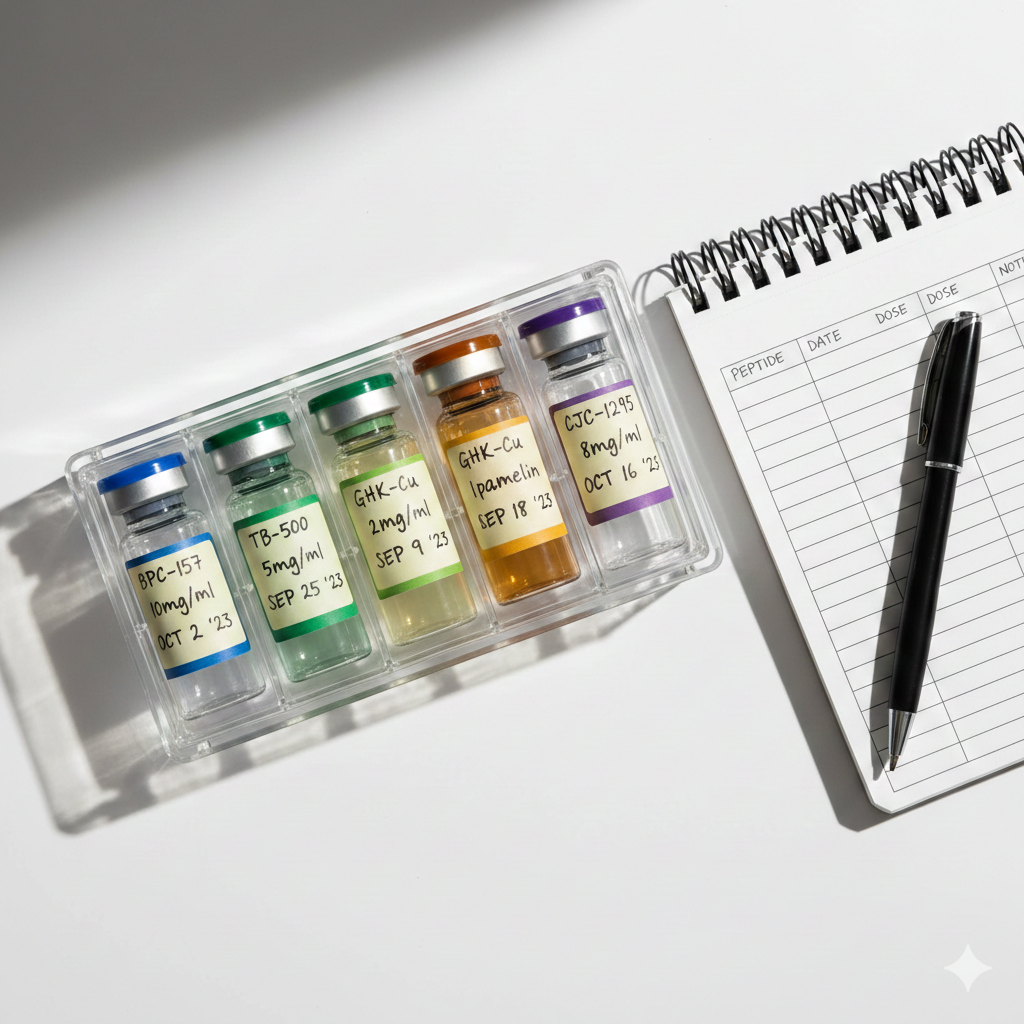
If manufacturing standards factor into how you evaluate vendors, BioLongevity Labs documents their synthesis, lyophilization, and third-party verification processes not just the end-point test results. |  Use Biologevity Labs Coupon Code PROBIO15 for 15% off |
Modern life is inflammatory.
Chronic stress. Environmental toxins. Low-grade inflammation that quietly chips away at energy, focus, and long-term health.
BrocElite Plus delivers stabilized sulforaphane, one of the most researched plant compounds for cellular defense, detox support, and neuroprotection.
Sulforaphane activates your body’s internal antioxidant systems. It supports inflammation control. It strengthens detox pathways at the cellular level.
This is not another generic greens capsule. It’s targeted metabolic protection. If you care about resilience, cognitive longevity, and long-term health optimization, this belongs in your stack. Check out the link below and discover the magic of BrocElite Plus: |


Project Biohacking Resources
Some links may be affiliate links; I may earn a small commission at no extra cost to you. I only recommend vendors I use and trust, Biolongevity Labs!


👇🏻Supplements Affiliates👇🏻

Your body isn't broken — it's just been starved of the right nutrients. Clive de Carle's complete line of natural health essentials gives it exactly what it needs.
👇🏻Lab Affiliatess👇🏻



Guides
🔚 Outro & Final Thoughts
Degradation is normal. Premature degradation is a signal. If your peptides aren't holding the way they should under proper storage conditions, the answer probably isn't better technique. It's a better source.Until next time, stay ahead of your age!
– Jeff
Founder, Project Biohacking
Affiliate & Earnings Disclosure
Project Biohacking participates in affiliate partnerships with select peptide vendors. When you make purchases through the links provided in this newsletter or use discount code PROBIO15, I may receive a commission at no extra cost to you.
These affiliate relationships do not influence my recommendations, I only promote products and vendors I personally use, have researched thoroughly, and believe provide value to the biohacking community. All opinions expressed are my own based on personal experience and research.
Your support through these affiliate links helps fund the research, testing, and content creation that makes Project Biohacking possible.
Disclaimer: I’m here to share what I’ve learned, not to replace your doctor. Always check with a qualified healthcare provider before trying anything new. And yes, peptides are often for research use only; please don’t turn your kitchen into a chemistry lab without supervision.