- Project Biohacking Newsletter
- Posts
- The Peptide Revolution: Why Injectable GHK-Cu Is Changing the Hair Loss Game
The Peptide Revolution: Why Injectable GHK-Cu Is Changing the Hair Loss Game
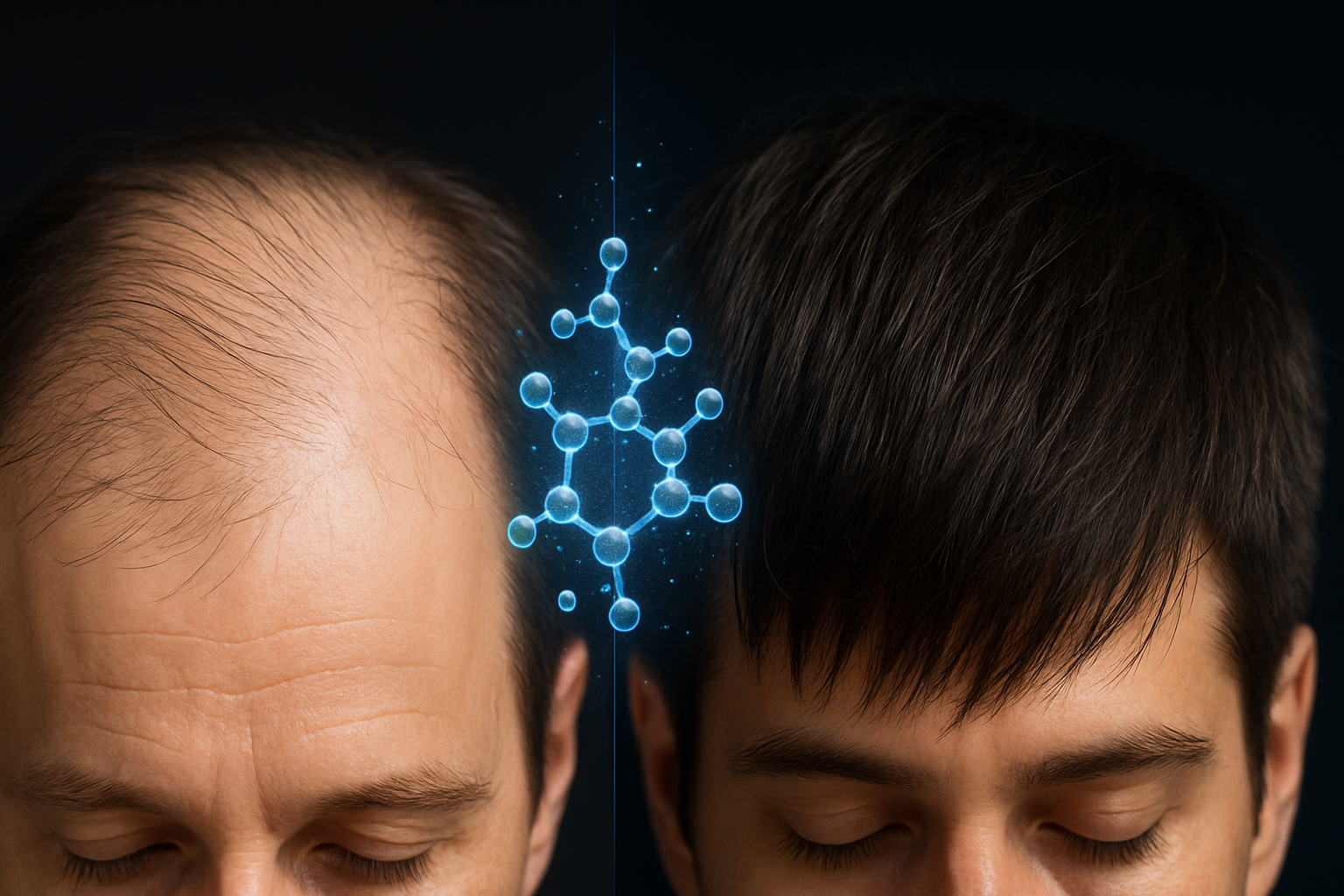
What if the solution to hair loss wasn't found in a pharmaceutical blockbuster, but in a naturally occurring tripeptide delivered systemically for maximum effect?

Jeffrey Nunn
December 09, 2025
Millions of people worldwide struggle with hair loss. Many are now turning to peptide therapy as a solution. These small chains of amino acids show real promise in clinical studies. They offer hope for those dealing with thinning hair or pattern baldness.
Table of Contents

Gif by trt_network on Giphy
While most people debate Rogaine or finasteride (with its infamous side effects), a quieter revolution is happening. Injectable GHK-Cu (Copper Tripeptide-1) is emerging as one of the most promising, science-backed approaches to reversing hair thinning and follicle miniaturization from the inside out.
Why Injectable Over Topical?
Here's what separates injectable peptides from topical treatments: systemic bioavailability and multi-organ benefits.
Topical applications face absorption barriers—you're hoping enough penetrates the scalp to reach follicles. With subcutaneous injection, GHK-Cu enters your bloodstream directly, reaching hair follicles through internal circulation while simultaneously benefiting skin elasticity, wound healing, inflammation reduction, and tissue regeneration throughout your entire body.
You're not just treating hair loss. You're upgrading your entire biological operating system.
The Science Behind GHK-Cu
Originally discovered for wound healing, GHK-Cu has become a regenerative medicine cornerstone. When delivered systemically, clinical observations report:
12-18% increase in hair density after 12-16 weeks
Reduced shedding and improved thickness
Enhanced follicle size and activity
Improved systemic inflammation markers
Bonus anti-aging effects on skin and recovery
How it works: Injectable GHK-Cu circulates throughout your body, stimulating collagen production everywhere—not just your scalp. It increases angiogenesis (blood vessel formation), improving nutrient delivery to all tissues including hair follicles. It modulates gene expression to upregulate growth genes while downregulating inflammatory pathways.
Most importantly, it addresses oxidative stress and chronic inflammation at the systemic level—two major contributors to accelerated aging and hair loss.
The Systemic Advantage
Your hair is only as healthy as your circulation and inflammation levels. Every follicle needs constant oxygen, nutrients, and waste removal via blood flow. Injectable GHK-Cu promotes vasodilation through nitric oxide signaling throughout your entire vascular system—improving circulation everywhere, including your scalp.
While it doesn't block DHT (the primary driver of pattern baldness), it modulates the hormonal environment and counteracts downstream inflammatory damage. Less systemic inflammation equals healthier follicles and better resilience despite DHT presence.
The Injectable Protocol
Standard dosing for hair restoration and anti-aging:
1-3mg subcutaneous injection, 3-5 times per week
Typical cycle: 8-16 weeks, then assess
Can run continuously with proper monitoring
Subcutaneous injections in abdomen or thigh
Maximize effectiveness: Support with adequate protein (1g per pound bodyweight), micronutrients (biotin, iron, zinc, omega-3s), quality sleep, stress management, and cardiovascular exercise.
Works synergistically with DHT management strategies, microneedling, and red light therapy.
What to Expect
The timeline:
Weeks 4-8: Reduced shedding, improved recovery
Weeks 12-16: Visible density improvements
Months 6-12: Continued gains plus skin quality and joint health improvements
Stop using it? Gradual return to baseline
Most common "side effect"? Looking and feeling younger. Injectable GHK-Cu is well-tolerated when using pharmaceutical-grade peptides at appropriate doses.
The Bottom Line
Injectable GHK-Cu represents one of the most scientifically-validated approaches to hair restoration and systemic anti-aging available. It's not magic, but it's a legitimate tool backed by clinical evidence and real-world results.
Hair loss is multifactorial—genetics, hormones, inflammation, circulation, stress all play roles. Injectable peptides address multiple pathways simultaneously while providing system-wide benefits.
Here's what separates successful biohackers: system-level thinking. Injectable GHK-Cu works best when you've optimized sleep, nutrition, stress management, and cardiovascular health. It's a force multiplier, not a band-aid.
From Project Biohacking Insights Blog
To learn about adding topical into your hair protocols check out the latest blog post!
Project Biohacking Resources
Go to the Affiliate page and book mark it to keep your sources and discounts handy!
Quick links to Peptide Sources listed Discount Codes
👇🏻Peptides👇🏻
Biolongevity Labs - PROBIO15 for 15% off
Limitless Biotech - PROBIO15 for 15% off
Rejuvatide Peptides - PROBIO15 for 15% off
Oral Bioregulators
Vita Stream - Use PROBIO10 for 10% off
👇🏻Supplements👇🏻
👇🏻Labs👇🏻
Guides
From Around The Web
🔚 Outro & Final Thoughts
The Biohacker's Advantage
Here's what separates our community from everyone else: we don't guess, we test.
Injectable GHK-Cu isn't theory—it's a protocol our coaching clients are running right now with tracked results: reduced shedding, increased density, improved recovery markers, better skin quality. The data doesn't lie.
Want those results for yourself?
Project Biohacking's coaching provides:
Customized injectable peptide protocols
Pharmaceutical-grade source verification
Biomarker tracking and optimization
Integration with your existing stack
Ongoing protocol adjustments
Stop wondering if it works. Start tracking proof that it does.
What's Coming: Next week we're covering the peptides Big Pharma doesn't want you to know about—and why they're changing the longevity game for those who know where to look.
Until next time, trust data over hype and stay ahead of your age!
– Jeff
Founder, Project Biohacking
https://www.projectbiohacking.com/
Disclaimer: I’m here to share what I’ve learned, not to replace your doctor. Always check with a qualified healthcare provider before trying anything new. And yes, peptides are often for research use only; please don’t turn your kitchen into a chemistry lab without supervision.