- Project Biohacking Newsletter
- Posts
- The Peptide That Goes Inside the Mitochondria
The Peptide That Goes Inside the Mitochondria
Most antioxidants work outside the cell. SS-31 doesn't.

Jeffrey Nunn
April 10, 2026
Hey Biohackers,
If you caught this week's blog post on SS-31, you already know the structural story — cardiolipin, respiratory supercomplexes, why a compound that targets the inner mitochondrial membrane is fundamentally different from anything you can find on a supplement shelf.
This newsletter doesn't retread that.
What I want to talk about here is something the post mentions but doesn't dwell on: why SS-31 failed in some trials, and why that failure doesn't invalidate the mechanism.
Because how you interpret mixed clinical results tells you a lot about how you think about peptide research generally.
Affiliate Disclosure: This newsletter contains affiliate links. When you purchase through these links using code PROBIO15, I may earn a commission at no additional cost to you. I only recommend vendors I personally use and trust.

The powerhouse of your cells is under siege and SS-31 is the elite reinforcements it’s been waiting for.
The MMPOWER-3 Problem
In 2023, the MMPOWER-3 trial results landed in Neurology. The trial was testing elamipretide in patients with primary mitochondrial myopathy — a population where mitochondrial dysfunction is not theoretical, it's the entire diagnosis. These are people who can't walk far without stopping. Their mitochondria are measurably broken.
SS-31 didn't move the primary endpoint. Six-minute walk test, fatigue scores — no statistically significant improvement versus placebo.
That's a real finding. Worth taking seriously.
But here's what happened in the follow-up analysis: when researchers stratified by genotype, patients with nuclear DNA defects showed a 25-meter improvement in the walk test versus placebo. Not huge. But real and directionally consistent. The authors described it as hypothesis-generating — meaning the compound may work, but only in the right patient subgroup, with the right underlying defect.
This is almost certainly the story with SS-31 across multiple indications: the compound's mechanism is sound, but mitochondrial dysfunction isn't one thing. It's a category. A tool that fixes supercomplex instability from cardiolipin oxidation doesn't necessarily fix mitochondrial myopathy driven by a different defect in the respiratory chain.
Patient selection was the variable. Not the biology.
The Barth Syndrome Exception
Here's the counterpoint that puts the MMPOWER-3 result in perspective.
SS-31 (elamipretide) received FDA approval for Barth syndrome in September 2025. First approved drug for that indication. Ever.
Barth syndrome involves a specific defect in cardiolipin remodeling — the exact vulnerability SS-31 was designed to address. In that precise context, where the target is clearly defined and the compound's mechanism maps directly to the defect, it worked well enough to earn approval.
That's the lesson I'd take from the full body of evidence: SS-31 is not a broad-spectrum mitochondrial fix. It's a precision instrument for a specific mitochondrial failure mode. Where that failure mode is present and measurable, the compound performs. Where it's mixed in with other pathology, results get noisy.
This matters for how the broader research community thinks about application.
What This Means for the Longevity Angle
Most of the biohacking community's interest in SS-31 comes from the aging angle. And that's not unreasonable. Cardiolipin oxidation is a documented feature of mitochondrial aging. Supercomplex stability declines with age. The PRECLINICAL data here is some of the strongest in mitochondrial pharmacology — Campbell et al. (2019) showed improved exercise tolerance and redox reversal in aged mice, and Chiao et al. (2020) showed late-life cardiac function improvements in old animal models.
What we don't have yet is well-powered human data in healthy aging populations.
That gap doesn't mean the mechanism is wrong. It means the research is ahead of the clinical trials pipeline, which is normal for this space. It also means anyone exploring SS-31 outside a clinical context is operating ahead of the evidence — which is a choice that requires honest risk-benefit thinking, not just mechanism appreciation.
The compound is interesting enough that serious researchers are paying attention. It's also not the kind of thing where you can substitute enthusiasm for rigor in the sourcing and quality department.
On Sourcing
SS-31 is hard to find right now, and half of what's out there I wouldn't touch. The mechanism only works if the peptide is actually SS-31, which means correct sequence, verified purity, and a real COA from an independent lab. I've been pointing people to Ascension Peptides. They have the 10mg kit in stock and they meet the sourcing standard I hold all the vendors I recommend to. Use code PROBIO20 for 20% off. 👉 Ascension Peptides SS-31 10mg Kit
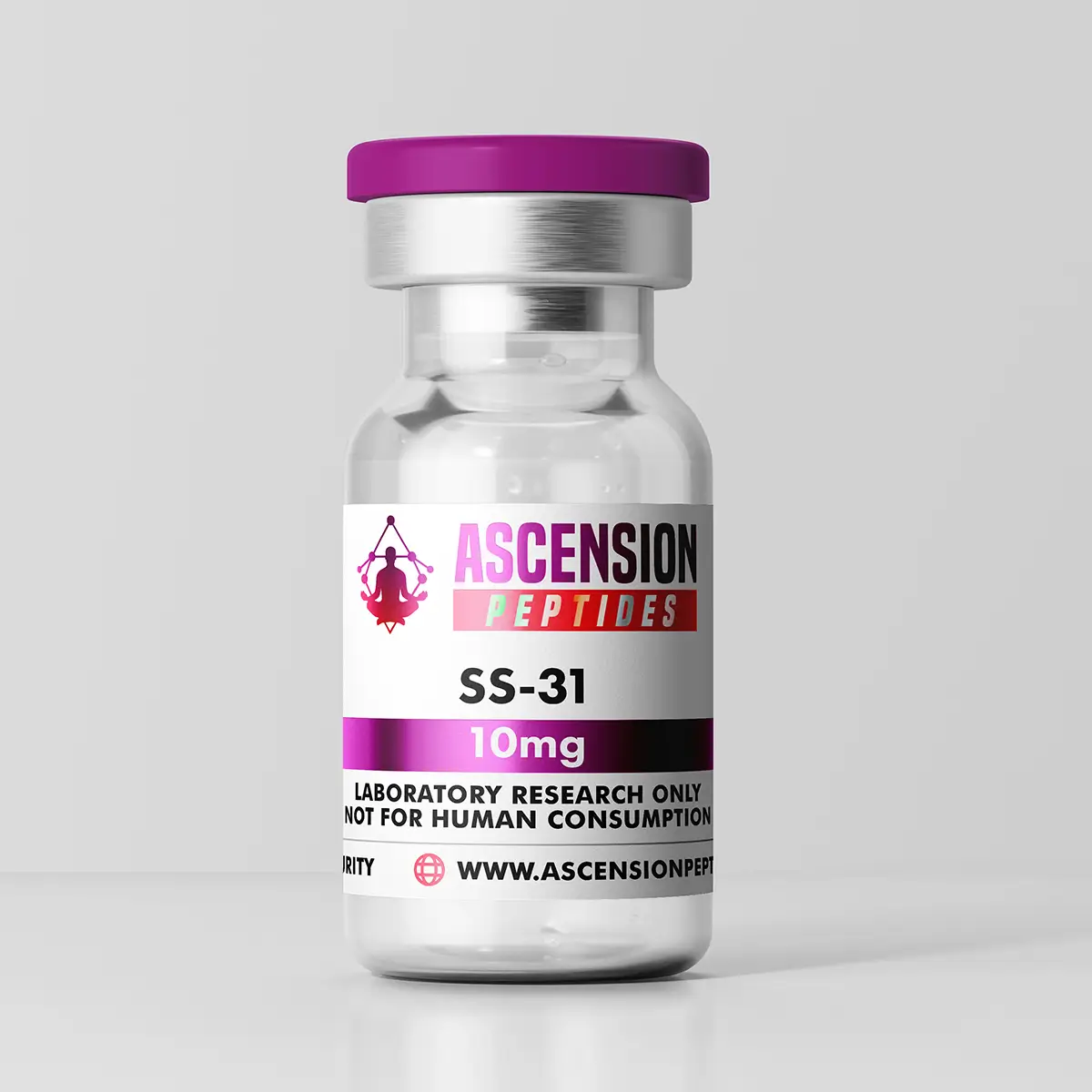
Research peptides are sold for laboratory and research purposes only — not for human consumption.
Full Blog Post
If you want the complete mechanistic breakdown — cardiolipin chemistry, how respiratory supercomplexes assemble, the full clinical trial landscape, and the kidney and neurological research threads — the full post is here:


Project Biohacking Resources
Some links may be affiliate links; I may earn a small commission at no extra cost to you. I only recommend vendors I use and trust, Biolongevity Labs!

👇🏻Supplements Affiliates👇🏻
Your body isn't broken — it's just been starved of the right nutrients. Clive de Carle's complete line of natural health essentials gives it exactly what it needs.
👇🏻Lab Affiliatess👇🏻


Guides
From around the Web
🔚 Outro & Final Thoughts
Of everything I've researched and experimented with over the years, SS-31 is the one that changed how I think about cellular health entirely. Once you understand that most oxidative damage starts at the inner mitochondrial membrane and that virtually everything else we take works somewhere downstream of that the targeting precision of this compound hits differently. It's my favorite for a reason. The biology earns it.
Until next time, stay ahead of your age!
– Jeff
Founder, Project Biohacking
Affiliate & Earnings Disclosure
Project Biohacking participates in affiliate partnerships with select peptide vendors. When you make purchases through the links provided in this newsletter or use discount code PROBIO15, I may receive a commission at no extra cost to you.
These affiliate relationships do not influence my recommendations, I only promote products and vendors I personally use, have researched thoroughly, and believe provide value to the biohacking community. All opinions expressed are my own based on personal experience and research.
Your support through these affiliate links helps fund the research, testing, and content creation that makes Project Biohacking possible.
Disclaimer: I’m here to share what I’ve learned, not to replace your doctor. Always check with a qualified healthcare provider before trying anything new. And yes, peptides are often for research use only; please don’t turn your kitchen into a chemistry lab without supervision.